Understanding the Panchang (Hindu Lunar Calendar)
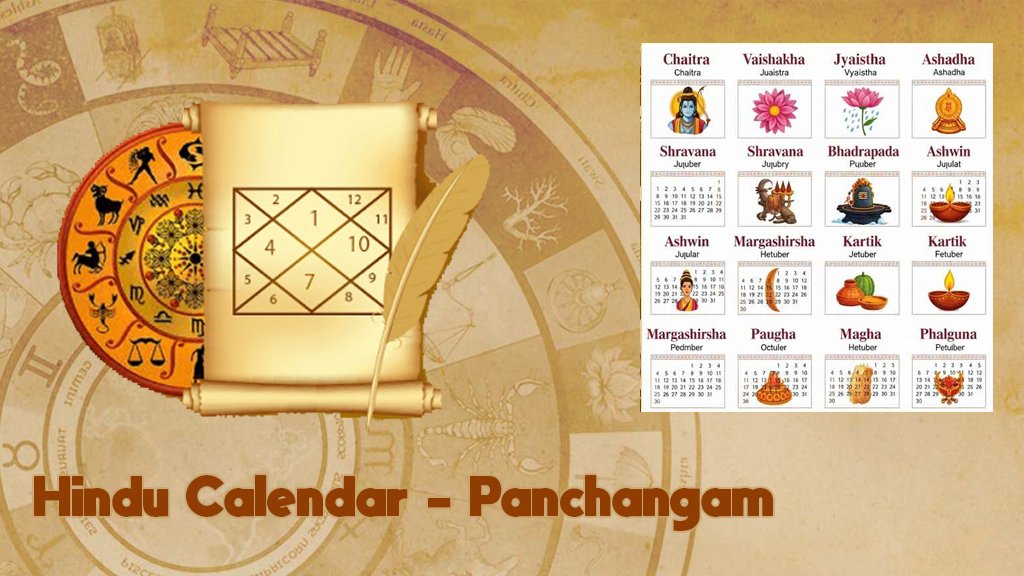
The Hindu lunar calendar is also known as Panchang or Panchangam. Panchang is a Sanskrit word which means ‘five limbs’, the said five limbs which form the backbone of the Hindu lunar calendar are Tithi, Karana, Nakshatra, Yoga and Vara. The Hindu lunar calendar has been used since ancient Vedic times. The primary difference between the Gregorian calendar and the Hindu lunar calendar is that the Hindu calendar is based on the movement of moon rather than that of Sun which is the case with the Gregorian calendar. As per the Hindu lunar calendar each lunar year has 354 days, divided equally in twelve months, thus each month comprises of 29.5 days. Owing to the diversity of cultures and tradition in Sanatan Dharma and the variety of influences over the centuries, there are a few variations of the Hindu lunar calendar available today. These various calendars have some deviations and are used by people from different parts of India. So, one will find many variations of the Hindu lunar calendar in India such as Bengali calendar, Tamil calendar, Guajarati calendar, Malayalam calendar, Assamese calendar and many more. Each of these calendars has some variations like different first or New Year day, different first month and some other details exhibiting regional culture and sensitivities. Also some of these are Purnimant calendar and others Amavasyant calendar depending upon which part of India they belong to. In Purnimant calendar the first day of the month starts on the next day after Purnina (full moon) whereas in Amavasyant calendar the first day of the month starts on the next day after Amavasya (no moon). To lessen the confusion, Saka calendar or the Indian national calendar was adopted on March 22, 1957. The saka calendar is a luni-solar calendar that uses elements of both solar and lunar calendars.
First references of time calculations are given in the Vedas. The earliest form of the Vedic calendar is believed to be from 1500 BC with usage of calculation from Vedic scriptures such as Taittir?ya Sa?hita, Atharvaveda and Vedanga Jyotisha. Over centuries various variations with slight modifications of the Vedic calendar were adapted by various ruling kingdoms like the Vikram Samvat, Shaka Samvat and others but the core logic remained the same. Date and time keeping methodology was of utmost importance in the Vedic period as it was used for various Vedic rituals and religious events. Thus, the Vedic calendar is much more holistic and accurate in many a ways. The said Vedic calendar used both movement of moon around the earth and movement of earth around the sun and also elements of astronomy, which makes it far more complex in nature as well. The movement and phases of the moon forms the basis of the Hindu lunar calendar. In the Hindu calendar a year consists of twelve months, each lasting 29.5 days which makes the year have a total of 354 days. Whereas the solar calendar has 365 days in the year, thus to sync both an additional month (Adhik Maas or Purushottam Maas) is added roughly every two years and seven months to the lunar calendar.
About Lunisolar Saka Calendar (Indian National Calendar)
As over a period of time and also geography there were more than one Hindu calendar, it further added to the confusion. Every state or region had its own version of the antiquated system in use. We may state that one of these various forms of these Hindu calendar is the Indian National Calendar, often known as the Saka Calendar, which has been the country's official standardized calendar since 1957.
The lunisolar calendar used by the Hindus accounts for the apparent movements of the Sun and Moon as viewed from Earth. It is mostly determined by how long a synodic lunar month is. The duration of the Moon's orbit around the Earth with respect to the Sun is included in each of the calendar's twelve lunar months.
Thirty lunar days make up each lunar month. These are then divided into two 15-day fortnights: a ‘dark’ fortnight with a declining or waning Moon and a ‘bright’ fortnight with the waxing half of the Moon's phases.
The Full Moon is often when the month begins in most parts of northern India, however most people in southern India calculate the days of the month starting with the New Moon.
The Hindu calendar also follows the solar months, which are symbolized by the signs of the zodiac that the Sun passes through at various points of the year as viewed from Earth. Solar months are also known as civil months since solar time calculation usually serves for civil purposes, whereas lunar months are typically used to define religious holidays and ceremonies.
Significance of Panchang
The Panchanga has many fascinating features and is rich in astrological, religious, and cultural significance. The Hindu calendar or Panchangam, also known as the Hindu Panchang plays a vital role in Vedic Astrology. In general, Vedic Astrology is a compilation of different lunisolar calendars. It includes a tabular presentation of astrological data together with a record of significant and auspicious dates.
Panchang synchronizes the position of planets in an individual's astrological chart with their current position. It is to identify and anticipate an individual's astrologically favorable days and periods.
What are the five elements of Hindu Panchang
The Hindu Panchang comprises of five different elements, which are listed below:
Vaar (Day of Week)
Panchang has a seven-day workweek and adjusts for special occasions, dates and events. The seven-day week runs from Sunday to Saturday and the name is derived from its delegate planets.
Tithi (The Lunar Day)
It speaks of the state and location of the Moon in either Krishna or Shukla Paksha. Tithi describes the Moon's state in either scenario. There are fourteen tithis in each of the two cycles between Amavasya and Purnima.
Nakshatra (Lunar Mansion)
According to Vedic Astrology, the universe is divided into 12 groups of stars, or zodiacs. Nakshatras are therefore accumulating 27 leads that frame a zodiac sign. Their analysis is based on the Moon's location.
Karana (Half Lunar Day)
Karana is one-half of the yog. A Tithi or Tithi, which has 11 Karanas, consists of two Karanas. However, only four of them are stationary, while the other seven are mobile.
Yoga (Sum of Moon and Sun Position)
The word yoga literally means addition or sum. It is the total of the Zodiac positions of the Sun and Moon. There are 27 types of yoga. 20 minutes at 13 degrees is one yoga. Thus, 360 is the total of all yogas. Every yoga has its own unique qualities.
Purnima and Amavasya in Panchang
Purnima is the day of the full moon. It represents rebirth or birth. The moon completes a full cycle on Purnima. For many religious occasions, including marriages and particular worship, this is an auspicious day. The purnima day is considered as an blessed and auspicious day. It is a important day to worship Lord Vishnu and Goddess Laxmi and to offer worship to them.
Amavasya is the day of the new moon. Therefore, it is considered as an inauspicious day so important events such as marriage or grah pravesh etc are not scheduled on this day. On Amavasya, the Sun and Moon are face the same direction. On this day, people worship Lord Shiva. Amavasya is also a day for paying tribute to our ancestors through ceremonies. This is an excellent day to do shraddha or havan.
Lunar and Solar Calendars
Solar and lunar elements are often combined in panchangas. For instance, the Hindu calendar is lunisolar, which means it is based on both the sun's location and the phases of the moon. The intricate relationship between solar years and lunar months is the outcome of this dual system.
Festivals and Spiritual Observances
Festivals, associated with religion and culture are deeply connected to the Panchanga. Based on religious beliefs and customs, particular festivals and auspicious days are observed to mark each month. For instance, the Panchanga determines the dates for celebrations of Diwali, Holi, Navratri and most other festivals.
Astronomical Significance
Panchangas often involve observations and computations related to astronomy. The timing of celebrations, harvests, and religious rites are all heavily influenced by the positions of celestial bodies like the sun, moon and other planets.
Yoga and Nakshatras
Panchangas also follow the motion of celestial bodies, including constellations and stars. When calculating the auspicious dates for different activities, the concepts of nakshatras (lunar mansions) and yogas (auspicious or unfavorable combinations of sun and moon) are crucial. Panchangas also take into account the movement of celestial bodies, including constellations and stars. When determining auspicious dates for various activities, the concepts of nakshatras (lunar mansions) and yogas (auspicious or unfavorable combinations of sun and moon) are crucial.
Seasonal changes
Many Panchangas are meant to represent the changing seasons. Sowing and harvesting are common agricultural activities that are timed so they align with ideal environmental conditions.
Leap Months and Interpolation
Panchangas occasionally use techniques like intercalation, or adding extra months, or leap days to balance the lunar and solar cycles. For example, to bring the lunar months into line with the solar year, the Hindu calendar periodically adds an extra month (Adhik Maas).
Traditions and cultures
Panchangas also show historical influences and cultural customs. In North India, for instance, the Vikram Samvat calendar which starts with the mythical king Vikramaditya is extensively used, especially in areas with historical value. An essential component of Indian life and history, the Panchanga is a fascinating reflection of the nation's many ethnicities, religious customs, agricultural heritage, and astrological knowledge.
Muhurat
Muhurat is an auspicious period of time identified through Vedic Astrology for beginning an important activity or undertaking. It is determined by carefully considering factors such as the Tithi, Nakshatra, Yoga, Karana, planetary positions, and the nature of the intended activity. Panchang play an important role in determining shubh Muhurat. The principle behind Muhurat is that actions initiated when cosmic energies are favourable are believed to receive greater support for success, stability, prosperity, and positive outcomes. Auspicious Muhurats are traditionally selected for important occasions such as marriage, Griha Pravesh, property purchase, starting a business, signing important agreements, buying a vehicle, performing Puja, and commencing new ventures. Choosing the right Muhurat is therefore considered a way of aligning an important beginning with favourable planetary and celestial influences.
Months in Hindu Calendar
Chaitra– This is the first month of the Hindu calendar. During the Chaitra month Goddess Durga is worshipped, in addition to Surya Dev, Lord Rama and Lord Hanuman. This month also marks the observance of the Chaitra Navratri fast.
Vaishakh– This is the second month of the Hindu calendar. During this month, people worship Lord Narasimha, Lord Parashuram, Goddess Ganga, Lord Kurma and Chitragupta. In addition, it is believed that this month's Navami of Shukla Paksha is when Mata Sitaji was born.
Jyeshtha– This is the third month of the Hindu calendar. The principal Deities worshipped during the third month of the Hindu calendar, Jyeshtha, are Maa Ganga, Maa Dhumavati, Maa Gayatri and Shani Dev.
Ashadha– In the fourth month of the Hindu calendar, Ashadha, Lord Vamana is worshipped alongside Lord Srihari Vishnu. This is the month when the Gods sleep. In Ashadh Gupta Navratri, ten Mahavidyas are worshipped.
Shravan– This is the fifth month of the Hindu calendar. The whole month of Shravan Maas is dedicated to worship of Lord Shiva. Somvaar or Mondays during this Month are regarded as utmost auspicious to worship Lord Shiva.
Bhadrapada– This is the sixth month of the Hindu calendar. The Ganesh Chaturthi festival is observed in the month of Bhadrapada alongside Krishna Janmashtami. During this month, people worship Lord Ganesha and Lord Krishna. As Shri Radha was also born in the month of Bhadrapada, She is also worshipped throughout this month.
Ashwin– According to Hindu tradition, the seventh month, or Ashwin month, is devoted to worshiping the Goddess Shakti or Devi. This month is dedicated to the observance of the Shardiya Navratri fasts. Pitrudev is also worshipped during this month as Shradh Paksha also falls in this month.
Kartik– This is the eighth month of the Hindu calendar. Kartik is regarded as a month devoted to Lord Vishnu and Goddess Lakshmi. On the day of Deepawali in this month, Goddess Mahalakshmi is worshipped. As per scriptures Lord Vishnu also awakens from His Yoga Nidra in this month. In certain states, Goddess Kalika is also revered during this time. During this month, people also worship Dhanvantari Dev, Kuber, Yamdev, Chitragupta, Shri Krishna, and other Deities.
Margashirsha– The ninth month of the Hindu calendar is the Margashirsha month. During this worship is offered to Lord Satyanarayan, Goddess Laxmi, Lord Krishna, Lord Dattatreya, Pitrudev, Bhairav. In this month Gita Jayanti is also celebrated.
Paush– The tenth month of the Hindu calendar, known as Paush month, is dedicated to worshiping Lord Vishnu and Lord Surya Dev.
Magha– This is the eleventh month of the Hindu calendar. Along with Lord Shri Hari Vishnu, the Sun God is worshipped during this month. During this month, Gupt Navratri is celebrated, wherein ten Maharoops or Mahavidyas Goddesses are worshipped.
Falgun– The last, or twelfth month in the Hindu calendar is Falgun or Phalguna, it is dedicated to the worship of Lord Shiva and Kamdev in addition to Prahlad and Lord Narasimha. Being born on the Ashtami day of this month, Maa Sita is also worshipped throughout this month.
Related posts
16 Samskaras and their Significance
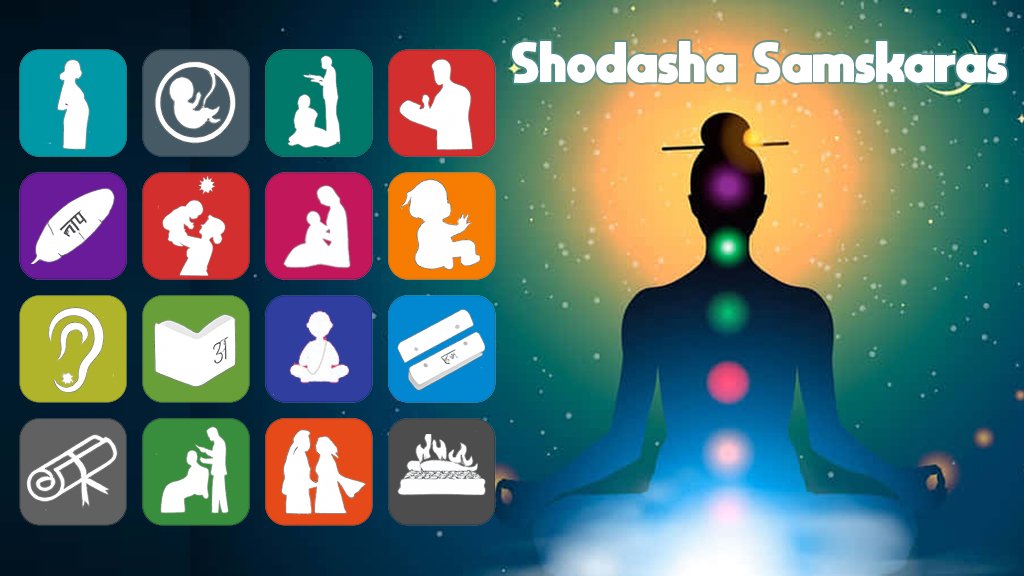
In Sanatan culture, Samskaras are rites of passage; they are rituals or ceremonies that are to be undertaken during various stages of life. They can also be termed as life events which have been devised by the learned through their wisdom, knowledge and experiences and passed on through generations. Samskara or Sanskara can be described as various rituals or customs that are to be performed to live a life in accordance with Dharma. At various stages of life and spiritual journey these Samskaras are recommended by ancient sages for purification and other benefits. Samskaras help an individual live a balanced and grounded life and become a member of the society and community. Ancient sages thousands of years ago recommended these Samskaras in Vedic scriptures such as Grihasutras and others. Sage Aswalayana recommends 11 customs, Sage Bauddhayana, Paraskar and Varaha recommend 13, Sage Vaikhana talks of 18 and Maharishi Gautam about 40 sanskaras. But the most widely accepted list of Samskaras are the 16 Samskaras that are recommended by Rishi Veda Vyas. Samskaras, also known as Sanskaras have profound physical, spiritual and emotional benefits for an individual. In Sanatan Dharma, there are sixteen primary Samskaras that are to be conducted during different stages of an individual’s life. Many a time conducting a particular Samskara signifies that a particular stage in a native’s life has begun or has ended. The word ‘Samskaras’ is a Sanskrit word which roughly means preparation or ‘getting ready’. It can also be termed as a purification process by cleansing or refinement. The 16 Samskaras in themselves encompass within themselves various physical, spiritual, mystic and Divine aspects and dimensions.
The significance and importance of undertaking the 16 Samskaras are mentioned in numerous Vedic scriptures along with the methodology of conducting them. The benefits are implication of the 16 Samskaras traverses through more than one life-time. They help one grow spiritually, learn and break the cycle of life and death (reincarnation) and ultimately achieve Moksha or liberation. Vedic scriptures mention how the Samskaras help a native free themselves from the bondages and karmic debts and propels his soul on the path of purification and spiritual enlightenment. Generally speaking, all aspects of human life are being covered by the Samaskaras. It addresses the Adhyatmik (Spiritual), Adibhautik (Physical) and Adhideivik (Divine) aspects of life. By adhering to these rituals at different stages of life, an individual can destroy negative karma and purify and cleanse themselves and grow spiritually as well as materially. Out of these 16 Samskara, 8 are primary or very important in nature and these are known as Ashtasamskaras or eight Samskaras. These eight Samskaras are Namakarana, Anna Prasana, Karnavedha, Keshanta Karma, Vidyarambha, Upanayana, Vivaha and Antyeshti.
Significance and Benefits of the 16 Samskaras
Conduction the 16 Samskaras have numerous physical and spiritual benefits, primarily it blesses one with peace of mind, stability and spiritual growth. Subconsciously, they create memories that help shape distinct positive behaviors and perspectives. Undertaking the Samskaras are in themselves accumulation of good karma, an act of purification that causes destruction of negativities and ignorance. The also help give proper perspective and direction during various stages of life especially when there is confusion or period of uncertainty or problems. As per Vedic scriptures there are a total of forty Sanskaras that are to be undertaken. Out of these forty, sixteen are considered as most pious, major or primary ones; together they are referred to as ‘Shodasha Sanskaras’. In Sanatan Dharma, life is considered as sacred and every part of it is to be celebrated. Thus the 16 Samskaras can also be termed as celebration of an individual’s journey of life through various phases, from birth to death.
What are the 16 Samskaras
Mentioned below are the sixteen Samskaras in Sanatan Dharma and their details:
1. Garbhadhana
Garbhadhana samskara is the first amongst the 16 samskaras. It is conducted when a married couple decides to start a family i.e. before conceiving a child. The word Garbhadhana is made using two words ‘Garbha’ meaning womb and ‘Adhana’ meaning receiving. The Taittiriya Upanishad stresses the importance of carrying on the bloodline and advises against ending it. The ritual helps bestow peace of mind, spiritual augmentation and blessings of a healthy child. During the ritual various Gods and Goddesses are invoked and worshipped such as Goddess Shakti, Ashwinikumar, Guru Brihaspati, Indra, Agni, Mitra, Varuna and Brahma and their Divine blessings are sought. The ritual ensures a physically, mentally and spiritually healthy child with a long and happy life.
2. Pumsavana
Pumsavana are done during a woman's first pregnancy. It is performed in the third month of pregnancy for safety of the child; again Lord Brahma is worshipped during the ritual. The ritual is believed to help the infant in the womb grow health and normally both physically and mentally. The ritual is done to ensure the good health, well-being, and auspicious development of the unborn child. Rooted in ancient Ayurvedic and spiritual practices, it is believed to promote the desired qualities and vitality in the baby while invoking divine blessings for a smooth pregnancy.
3. Seemantonnayana
The ritual is performed in the seventh or the ninth month of pregnancy for safe delivery of the baby. During the sanskara Lord Dhata (one of the twelve Adityas) is invoked and worshipped. The ritual ensures a safe and healthy delivery and also provides the expectant mother a sense of peace, especially during the final month(s) of pregnancy. This ceremony is also a social and festive like baby showers, providing joy and happiness to the expecting mother.
4. Jatakarma
Jatakarma samskara is performed after the child's birth; it represents the separation from the mother's womb. During the ritual Goddess Savita is worshipped. This ceremony symbolizes the child’s first introduction to family, culture, and spiritual values. Traditionally, it involves touching honey or ghee to the baby’s lips while chanting sacred mantras, signifying the wish for a sweet and righteous life. The father often whispers the name of God or sacred verses in the baby’s ear, believed to awaken spiritual consciousness from birth. Jatakarma also includes prayers for the child’s health, intelligence, and longevity, invoking divine protection and guidance.
5. Namakarana
In Vedic custom, a child is named on the eleventh or twelfth day after birth. In accordance with traditional naming practices, parents officially announce the child's name during the Namakarana ceremony. The newborn is given a unique identity by this momentous occasion, which occurs in front of family and friends. The ritual is significant from a cultural and social aspect since it officially presents the baby with the selected name to the community.
6. Nishkarma
Nishkramana, which means ‘going out, coming forth’, takes place during the fourth month following a baby's birth. The infant's parents formally introduce the baby to the outside world by taking them to a neighboring temple. The baby's mental development is encouraged by this practice since impressions are created by what they see and hear. It marks the start of the baby's interactions with the outside world, which will have an impact on their initial cognitive growth. During the ritual Surya Dev is worshipped.
7. Annaprasana
Annaprasana is conducted in the sixth month after the baby's first teeth grow. It represents the introduction of solid food, typically cooked rice. Before this, the newborn relies only on breast milk. The ceremony is intended to bless the infant with good health and power. The ceremony is an important milestone as the infant begins to eat a solid meal for the first time, signifying their growth and development.
8. Chudakarana
Chudakarma is popularly known as Mundan Sanskara. The tradition celebrates the child's first haircut and the beginning of a new stage in life. The baby's hair and nails are cut during the ritual, signifying purification, rebirth and growth. According to science, hair on the head improves beauty while providing protection from the elements. This sanskara is meant to support the development of healthy hair and general well-being.
9. Karnavedha
During the Karnavedha ritual, the child has ear piercing done. It is believed that the ritual has many spiritual and health benefits. It is believed that ear lobes have important acupressure point which stimulates development of intellect.
10. Vidyarambha
Vidyarambha is a ceremony that marks a child's official initiation into educational journey of learning and studying. It is usually performed when the child is five years old. The goddess of knowledge, Maa Saraswati is worshipped during this ceremony. In the past the students started their education under the guidance of a guru as prescribed in the guru-shishya parampara after the said sanskara. The ritual places a strong emphasis on living a disciplined life and committing oneself fully towards learning and developing wisdom.
11. Upanayana
Upanayana is regarded as one the highest sanskara. The sanskara is popularly known as the thread ceremony of the child when a sacred thread hung from one shoulder and passed around their front and back. During the ceremony Lord Indra is worshiped. ‘Upa’ means close and ‘nayana’ means to bring thus Upanayana can be translated as ‘bring close of Divine or Guru’. The ceremony is an integral custom in their spiritual and intellectual journey of an individual.
12. Vedarambha
The term Vedarambha represents the beginning of Vedic knowledge. Vidyarambha signified the first stage of education, whereas Vedarambha marks the start of Vedic learning precisely. Under the guidance of their ancestors and Guru, one explores the Vedic expertise in this sanskara. This ceremony highlights the important point at which every student sets out on the long path of comprehending and mastering the holy scriptures, highlighting the importance of Vedic education in spiritual and cultural traditions.
13. Keshanta
Kesh means hair, whereas anta symbolizes the end. The Keshanta sanskara is shaving one's beard for the first time when one reaches adulthood, usually when one's facial hair starts to grow. The rituals symbolize an important transition from childhood to adolescence, encouraging the person to recognize and understand the mental and physical changes that come during this period.
14. Samavartana
Samavartana means ‘going back home from the Acharya's house,’ signifies the student's departure from the guru's residence at the end of their education under the Gurukul system. At the end of formal education, this sanskara represents the student's readiness to go on to the next phase of their lives. When the student is ready to step away from the mentor's supervision and use the knowledge they have gained to navigate the next period, it is considered a transition in the traditional Gurukul system.
15. Vivaha
In Sanatan Dharma, the wedding ceremony, or Vivaha, is one the most significant ceremony. The engagement is the first step, and the Praavisya Homam or Nishekam ceremony is the last. The entire procedure takes place over several exciting celebration days. This unique union signifies the culmination of several ceremonies and shows a couple's commitment to one another. According to Hindu customs, the wedding ceremonies incorporate a variety of cultural traditions that strengthen the tie between the husband and wife.
16. Anthyeshti
Antyeshti is also known as antim sanskar meaning the last samskara. After a person dies, relatives perform Antyeshti, the last sanskara in a Hindu's life. The final ceremonies are systematically done with the assistance of Brahmin priests, in accordance with Vedic texts, which state that the soul undergoes reincarnation after leaving the old body. Following ten days of sorrow, a purification ceremony is held on the eleventh day. On the thirteenth day, a feast honors the soul's successful journey to its final resting place.
Category