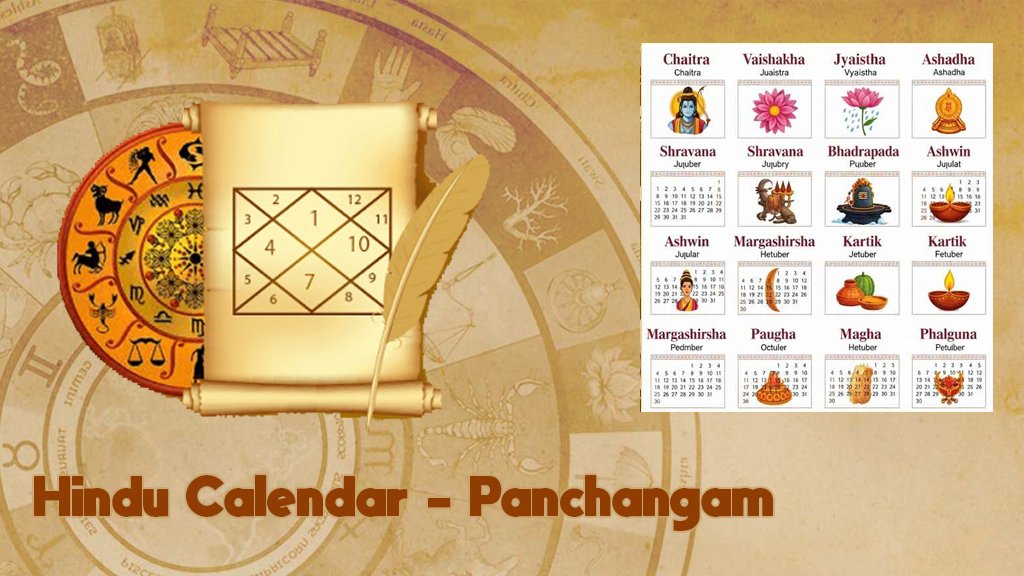
The Hindu lunar calendar is also known as Panchang or Panchangam. The Sanskrit word means ‘five limbs’, the said five limbs which form the backbone of the Hindu lunar calendar are tithi, karana, nakshatra, yoga and vara. has been used since ancient Vedic times. The primary difference between the Gregorian calendar and the Hindu lunar calendar is that the Hindu calendar is based on the movement of moon rather than that of Sun which is the case with the Gregorian calendar. According to the Hindu lunar calendar each lunar year has 354 days divided equally in twelve months thus each month comprises of 29.5 days. Owing to the diversity of cultures and tradition in Sanatan Dharma and the variety of influences over the centuries, there are a few variations of the Hindu lunar calendar with some deviations which are used by people from different parts of India. Thus in India there are many variations of the Hindu lunar calendar such as Bengali calendar, Tamil calendar, Guajarati calendar, Malayalam calendar, Assamese calendar and many more. Each of these calendars has some variations like different New Year day, different first month and other details exhibiting regional culture and sensitivities. Also there are Purnimant calendar and Amavasyant calendar in different part of India. In Purnimant calendar the first day of the month starts on the next day after Purnina (full moon) whereas in Amavasyant calendar the first day of the month starts on the next day after Amavasya (no moon). To lessen the confusion Saka calendar or the Indian national calendar was adopted on March 22, 1957. The saka calendar is a luni-solar calendar that uses elements of both solar and lunar calendars.