Human Energy System as per Vedic Scriptures
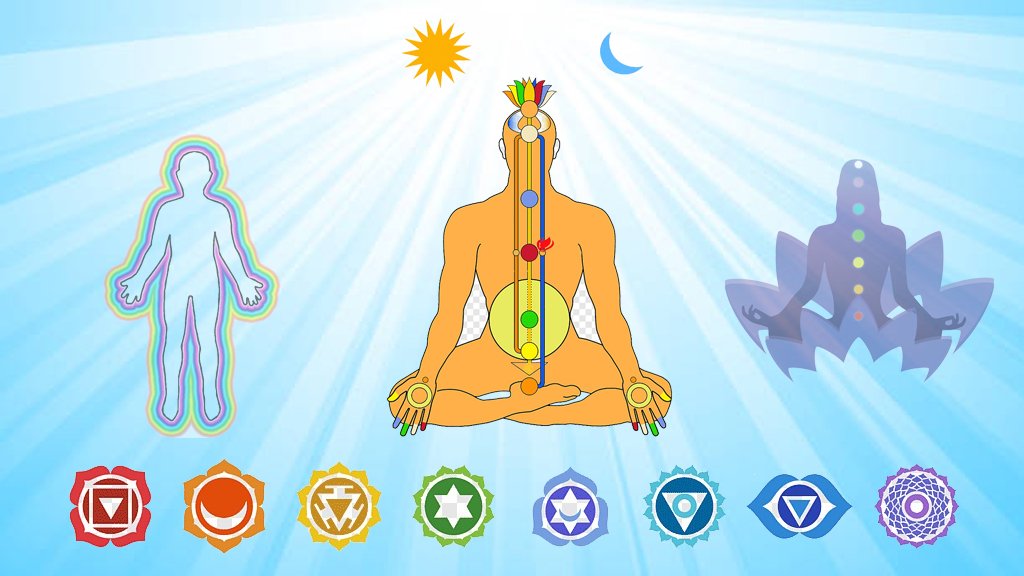
The Vedic Scriptures define the human body beyond its physical appearance. According to these teachings, the human body is a sophisticated network of energy that regulates our physical, mental, and spiritual well-being. This holistic viewpoint incorporates the concept of energy fields, chakras, and channels that aid in the flow of life force within us. According to Vedic philosophy, the cosmos is made up of both visible and dark energies.
Exploring the Energy system present in the human body
Medical research has not wholly investigated the human body's energy flow mechanism. Vedic science has described it fully. According to Vedic science, the human body consists of three spiritual organs. These organs generate, store, and distribute energy derived from food. Food initially enters the stomach, where it reacts with enzymes and fluids. It subsequently passes through the small and large intestines. During this process, Rudra Vayus, also known as vital air, absorbs meal components and transfers them to the bloodstream. These vessels convey the components to the heart, which contains the soul. The soul, like a fire, consumes these elements to produce energy.
The energy produced is stored as Kundalini Shakti at the Muladhara Chakra. The Kundalini sends energy to the mind through the Sushumna Nadi, positioned at the back of the head as you sleep. Throughout the day, the mind channels this energy to the five Karma Indriyas (organs of action). It also channels the energy to five Gyan Indriyas (organs of observation). This energy flow is facilitated by Nadis. These are space-based energy conduits. However, because of the modern detachment from Sanskrit pronunciation, these Nadis begin to narrow around the age of, 40-45, interfering with energy delivery to internal organs and producing ailments. Chanting Vedic Rudra Mantras is recommended for maintaining proper energy flow and well-being.
What is Aura?
We are each born with our own Aura, which is represented in our personality characteristics, type, attitude, and skills. It is simply an energy effect, an electromagnetic field within and around us. It is present in all living things, including trees and animals. This explains how people perceive us. Our Aura influences our behavior, preferences, and dislikes. It is an inner power that changes our perspective and, how we perceive things and life. The Aura contains a variety of energies. Almost everything we experience, both good and negative, is caused by the effects of the auras around us. Everyone has their own Aura, determined by the good and bad karmas they have committed in their previous and current lifetimes and other circumstances. Our Aura is the sum of positive and negative energies acquired by our good and bad karmas, as well as other means.
The Aura interacts with the energy, that surrounds us. It absorbs positive effects while protecting us from bad ones. Meditation, yoga, and pranayama are all practices that help to cleanse and build the Aura. This leads to a harmonious flow of energy.
What are Chakras?
Chakras are the body's energy centers. They are placed in the astral body, along the spine, beginning at the base and progressing to the crown. The astral body is energetic and coexists with our physical body. Every physical body part has an astral counterpart. The astral body can't be seen or touched. The chakras produce a distinct color and energy. Each is associated with a gland in the physical body. Each Chakra of our body connects to specific aspects of the body. It connects with spiritual, psychological, emotional, and also physical aspects of the human body. If chakras are blocks or malfunctions, they are supposed to produce physical, psychological, and emotional ailments. The chakras function as distribution centers. They distribute the five pranas to their respective local areas. When we have awareness about balancing these Chakra's energy, it promotes well-being and health. There are seven primary chakras in our body with distinct vibrations, colors, symbols, and sounds:
Muladhara Chakra/Root Chakra: The Root Chakra is situated at the base of the spine, between the anus and genitals. It is defined by feelings such as survival, stability, ambition, and self-sufficiency.
Swadhishthana Chakra/Sacral Chakra: The Swadhishthana Chakra, also known as the Sacral Chakra, is found in the lower belly, approximately four fingers below the navel. Its characteristics include a basic need for sexuality, as well as creativity and self-esteem.
Manipura Chakra/Navel Chakra: The Manipura Chakra is positioned in the solar plexus. It falls between the navel and the base of the ribcage. Manipura Chakra symbolizes the ego, rage, and animosity emotions.
Anahata Chakra/Heart Chakra: The Anahata Chakra is located in the heart. Anahata Chakra is a center of balance of the human body. This Chakra takes care of the feelings of affection. It also represents compassion and trust.
Vishuddha Chakra/Throat Chakra: The Visuddha Chakra is located near to the base of the throat. It is positioned near the thyroid gland. The Chakra is responsible for the motivational power within us. The expression of positivity, faith, and effective communication are all taken care of by the Vishuddha Chakra.
Ajna Chakra/Third Eye Chakra: The Ajna Chakra (pronounced 'Agya Chakra') is found between the brows. It is also termed as the Third Eye Chakra. It is frequently used as a focal point in asana practice. It helps to improve attention and awareness. This Chakra helps to remove the past-life karma. Ajna Chakra also provides emancipation and intuitive understanding. Its characteristics take care of intelligence, insight, intuition, and self-knowledge.
Sahasrara Chakra/Crown Chakra: The Sahasrara is termed as the Crown Chakra. It is situated at the crown of the head. The seventh Chakra represents spirituality, enlightenment, and dynamic thought and energy. It promotes the internal flow of enlightenment and provides the gift of universal consciousness.
What are Nadis?
In Sanskrit, nadi denotes "stream, tube, or pipe." Practitioners of traditional yoga and Ayurvedic traditions believe that the physical body contains thousands of nadis or subtle energy pathways. They are not visible to the human eye yet exist alongside nerves, blood vessels, and other anatomical structures. The primary role of Nadis is to transport Prana, or life-force energy, in our body. Nadis are analogous to our bodies' nerve systems, but their importance extends beyond the physical realms to the astral and spiritual planes of existence. Breath is very crucial in balancing and activating these pathways.
According to ancient Sanskrit writings, the human body contains 72,000 nadis, each of which, serves as a conduit for the passage of pranic energy. The three main Nadis are:
Ida Nadi: Ida Nadi is also known as the left channel. It originates in the Muladhara Chakra and goes to the left. It joins the other chakras, going in and out until it enters our left nostril. The Nadi represents our mental energy. Ida describes the feminine side of dualism.
Pingala Nadi: The origin of this Nadi is the same as Ida, but it flows to the right. It then weaves in and out of the remaining chakras before ending in our right nostril. Prana originates in Pingala Nadi. Pingala represents the male side of dualism.
Shushumna Nadi: Shusumna Nadi, also known as the middle channel, goes vertically up the spine from the root chakra to the crown chakra. This is the Nadi of spiritual consciousness, the most important component of human physiology. However, this Badi remains inactive among many of us because we do not pursue our spiritual existence.
What is Kundalini?
Kundalini can be best described as a tremendous, primal force, that represents our unrealized potential. It refers to the vast realm of the unknown that exists beyond the confines of our brains. Kundalini is defined as, "the dormant energy coiled at the base of the spine." Kundalini is the sum of two words, "kundal" means "coiled," and "ini" can be translated as "power." Kundalini Shakti is defined as the life force of all awareness we hold. This tremendous force is often represented as a serpent wrapped three and a half times. This can be awakened through yoga's physical and spiritual practices such as mantra, mudra, asana, and pranayama. When the kundalini shakti awakens, it rises through the chakras (energy vortices) in the energetic body, resulting in spiritual awakening manifested as freedom of choice, awareness, and a better ability to live a holistic life.
What is Prana?
Prana is fundamentally the universal life force that penetrates all that exists. It is a vital energy that surrounds and drives the universe. It provides the energy, for essential and daily tasks of the body, like breathing, talking, moving, thinking, digesting, breathing, and so on. Prana's function in our existence extends far beyond the act of breathing. This excellent vital force maintains our cells healthy, our organs working, and our thoughts clear. Imagine Prana as an unseen force that flows through thousands of energy channels, or nadis, within us, preserving our health and energizing our entire existence. Prana is categorized into five basic categories, each of which governs a particular function:
Prana: Prana vayu means "forward-moving air." It moves inside the body and controls all forms of reception, such as consuming food and beverages and breathing, as well as physical sensations and mental experiences.
Apana: Apana vayu, "the air that moves away." It goes downward and outward, controlling all modes of removal and proliferation. It regulates the evacuation of stool and urine, the discharge of semen, menstrual fluid, and the fetus, and the expulsion of carbon dioxide through the breath. More fundamentally, it governs the eradication of adverse sensory, emotional, and mental events. It forms the basis of our immune system.
Samana: Samana vayu, or "balancing air," flows from the periphery to the center via a churning and discriminating movement. It promotes digestion at various levels, operating in the gastrointestinal system to digest food, in the lungs to digest air or absorb oxygen, and in the brain to digest sensory, emotional, and mental experiences.
Udana: Udana vayu, or "the upward-moving air," raises and creates qualitative or transformative movements of life force. It governs body growth, standing ability, speech, effort, enthusiasm, and will. It serves as our primary source of good energy.
Vyana: Vyana vayu, or "outward-moving air," flows from the center to the periphery and governs circulation at all levels. It transports food, water, and oxygen throughout the body while circulating our emotions and thoughts in the brain, generating momentum and vigor.
Flow on Prana in the human body:
The subtle life force energy known as Prana by yogis is at the heart of all life and the universe. Prana, the subtle energy that circulates through our bodies, cannot be seen, touched, or tasted, but most yogis have experienced it. This mystical force flows through our bodies, animating every action, from gross physical movements to minute biochemical activities.
Without Prana, the vital power, the body is nothing but a lump of clay. Prana forms the body into limbs and organs by forming delicate nerve channels known as Nadis, which energize and operate the body. Prana Vayu creates openings in the head and brain, such as the eyes, ears, nostrils, and mouth. Udana Vayu helps to shape the mouth and voice organs. Apana Vayu opens up the lower body's urinary and excretory systems. Samana Vayu forms the digestive system around the navel, which includes the intestines, liver, and pancreas.
Vyana Vayu develops pathways in the arms and legs, such as veins, arteries, muscles, joints, and bones. Prana flows throughout the body, primarily through breathing. The navel is the main Pranic center for digestion. The small intestine processes Prana from food, which is stored in the muscles. The heart is the energy center for the Pranamaya Kosha, which transports subtle Prana from breathing via the blood.
The quality and quantity of Prana in our body have a significant impact on our ability. It helps to focus and concentrate. To sense and experience prana, our attention must be attracted to the subtle energies of the body or Pranamaya kosha. The five koshas are portrayed as cases or layers that obscure the light of our True Self. Pratyahara is the most effective yoga technique for shifting our concentration from the physical shell of Annamaya kosha to the Pranamaya kosha.
We cannot miss mentioning that our Vedic principles always respect the value of staying close to nature. It promotes and supports a nature-friendly lifestyle.
Related posts
Sacred Symbols in Hinduism
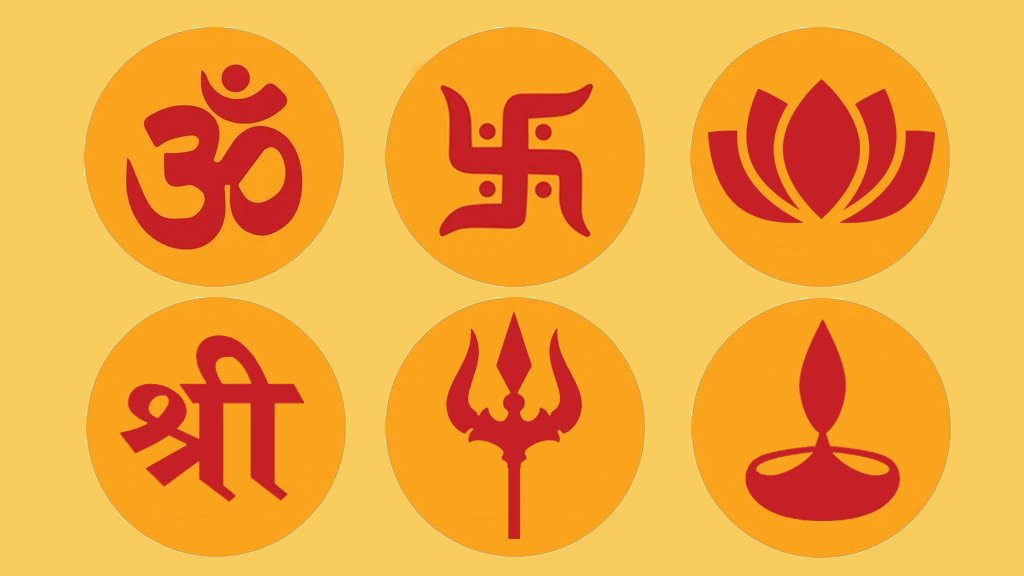
Sacred geometry and symbols play a major role in Sanatan Dharma. Sanatan Dharma encompasses a bouquet of beliefs but it is broadly believed that there is only one God which expresses itself in different forms and ways. This is signified by teachings of Upanishad like ‘Ekam Sad Viprah Bahuta Vadanti’ which means that the God is one and formless and is beyond the boundaries of understanding. Thus, God manifests in many forms and also affiliated to these many forms are sacred and auspicious symbols and geometries. These symbols play a great philosophical role in the Hindu religion and are given much significance. Many of these sacred symbols are associated with various Gods and Goddesses; other times they are auspicious geometries with profound spiritual meanings. The sacred symbols play the role of abstract representation of Divinity. These symbols work as bridge between the formless god and the limited human mind. Devotees find it much convenient if the God can be correlated to symbol, which can be interacted in daily lives.
One amazing thing about these auspicious symbols in Hinduism is that they are not only used in worship and holy rituals. They also have great scientific and spiritual importance. There is a broad scope of symbolism that involves physical gestures like offering prayers with folded hands (Pranam). Such gestures usually induce the right mood and awareness for the individual. There are numerous auspicious symbols in Hinduism which symbolizes the notion of inner purity. These sacred symbols are displayed at temples and homes to bring good fortune, invite positivity and keep away all sought if negativities. Here, we have listed some of the most sacred and auspicious symbols used in Hinduism, their meaning and also the significance they hold.
Om / Aum
Om is the primary, most sacred spiritual symbol in Hinduism. Om is the root mantra and the primal sound from which all creations originated. It consists of the three Sanskrit letters aa, au, and maa which together form the sound Om or Aum. The most significant symbol in Hinduism, it appears in all prayers and is the first part of most Deities' invocations. Om is the Hindu symbol for devotion, can be found at the top of letters, pendants, Hindu and family temples. There are very few rituals of worship without this mystic sound. Om is a part of the Archanas performed at Hindu temples after every mantra uttered. Om is also where the Holy Vedas begin. In Sanatan Dharma, Om is the ‘cosmic sound’, or the ‘mystical syllable’, or the ‘affirmation to Divine’. Om is also one of the popular mantras for meditation. The English terms ‘omniscience’, ‘omnipotent’ and ‘omnipresent’ which are associated with the Supreme God are examples of words that contain the syllable Om. It is therefore also used to denote authority and Divinity.
Swastika
Swastika is considered one of the most auspicious symbols in Hinduism. The word Swastika comes from Sanskrit which means ‘lucky or auspicious thing’. Use of Swastika symbol dates back 2nd Century BC. Swastika appears like an equilateral cross and its four legs bent at 90 degrees. This symbol is sacred not only in Hinduism but also in Buddhism and Jainism. As a symbol of luck and auspiciousness, the Swastika signifies "It is well." This ancient sun's sign's right-angled arms represent the indirect method of intuition rather than intellect by which divinity is understood.
Ghanti (Bell)
Ghanti or Ghanta is a ceremonial bell used in ritual puja that involves all senses, particularly hearing. Its ringing invokes the Gods, excites the inner ear, and reminds us that the universe, like sound, can be seen but not possessed. The bell is often made from brass and has a clapper. When the bell is rung, it emits a high-pitched sound. The ringing of a bell calls the gods while simultaneously stimulating the inner ear. Hindu temples typically have a single metal bell hanging at the entryway, which visitors ring when entering the temple. During the Puja, both priests and worshipers clang bells.
Shivalinga
Shivlinga is regarded as a particularly sacred emblem, representing Lord Shiva himself, according to tradition. Nearly all of the temples devoted to Lord Shiva have the Shivlinga. Hindu legend states that Lord Shiva himself took on the shape of a Linga so that his followers may worship Him. This is due to the fact that, while being formless and imperceptible to the unaided eye, Lord Shiva is present both on earth and in heaven. Shivling is conical at the top and broad in the middle. This is how flame takes shape. The God of Shaivite philosophy is formless. God took the appearance of a flame because of the souls' grace, which allowed them to understand God easily and experience liberation. This flame is worshipped as a stone lingam and in other forms that facilitate devotion. Shaivites regard this as more sacred than form worship. Shivlinga is a physical image of Lord Shiva and is meant to be touched, seen, and worshipped. It is guaranteed to devotees that by worshiping the Linga, they can establish a connection with Lord Shiva. Frequently depicted with the Yoni (which means womb or Prakriti) is the Shivlinga. This stands for the unity of Purush and Prakriti, or male and female, which precedes the creation of the universe.
Kalash
The Sanskrit word ‘Kalash’ means pot or pitcher. The Kalash is made from a metal that usually features a broad base and a small mouth, such as brass, copper, silver, or gold. During Hindu ceremonies, a coconut and a coronet of mango leaves are placed on a pot of water. The coconut is wrapped in red thread or linen, and the coronet of mango leaves is arranged so that the tips of the leaves come into contact with the water in the Kalasha. In all Hindu celebrations and events of marriage and childbirth, Kalasha is revered. The coconut is a symbol of affluence and a cash crop. The pot's water symbolizes nature's capacity to sustain life. The state of Andhra Pradesh has adopted the Kalash as its official state emblem.
Cow or Gau Mata
The cow or Gau mata is highly revered and honored and regarded as a sacred animal in Hinduism. Even though cows are not worshipped by Hindus, they are revered in practically all of India. While practically every animal is considered sacred in Hinduism, cows are held in higher regard than other animals. The cow produces butter, ghee, yogurt, and cheese in addition to milk and cream. It is said that cow milk refines a person. Cow manure is utilized in homes as a cleanser, fuel, and fertilizer. The cow is comparable to Mother Earth, the nourisher, the selfless giver, because of the abovementioned characteristics.
The Sri Symbol
The Sanskrit word ‘Sri’ is commonly used to address people in a respectful manner. In Hinduism, the title Sri is often used to symbolize Maa Laxmi and also to honor deities. Sri can also be written as Shree or Shri. When Sri is used without any other words, it alludes to the highest consciousness. For numerous Gods and Goddesses, like Sri Ganesh, Sri Lakshmi, and Sri Vishnu, Hindus apply the prefix Sri. The term Sri appears at the start of most Hindu mantras or in between mantra lines. Spiritual leaders in Hinduism use Sri followed by 108 or 1008.
Shankha or Conch
The Shankha is a revered Hindu symbol related to Lord Vishnu. According to Hindu scripture, the Shankha bestows fame, longevity, and fortune. The Shankha was used in ancient times to begin and end gatherings such as war, trips, and meetings. Shankha generated a sound known as Shankanad. Shankha is now blown during religious ceremonies in Hindu temples and homes. It is also used during Aarti to offer light to the deities. Shankha is often used to bathe deities, particularly Lord Vishnu.
Trishul
Trishul is Lord Shiva's trident, which is also borne by other Hindu gods, sages, and saints. Trishula's three prongs depict the Trinity (Brahma, Vishnu, and Mahesh) and The Three Modes of Nature: Creation, Maintenance, and Destruction. It also symbolized the three Kalas (past, present, and future) The Three Gunas (Sattva, Rajas, and Tamas), Three Powers (will, action, and wisdom), and Three Miseries (physical, mental, and spiritual). As the trident is wielded by the Goddess Shakti, her followers hold it in high regard and consider it as an important symbol of their devotion towards her.
Rudraksha
Rudra, which means "Lord Shiva," and Ak?a, which means "Teardrops," combine to form the Sanskrit term for "rudraksha." Rudraksha is a representation of Lord Siva's tears poured in response to human suffering. Hindus wear the Rudraksha seeds strung together as a garland. It's thought that using 108 plus one beads is the proper amount. "The Guru Bead" is the name of the additional bead. Rudraksha is best worn without the use of metal since it is never polished or cut like a gemstone.
Nandi
Lord Shiva rides the Nandi bull, who serves as both the deity Parvati's gatekeeper and his mount. Nandi is a Sanskrit term meaning ‘one who brings joy’. Nandi Bull is portrayed as a seated statue in temples devoted to Lord Shiva. In Hinduism, it's important to first obtain Nandi's blessings before worshiping Lord Shiva. In India, there are numerous temples devoted just to Nandi Bull.
Peacock feather
Lord Kartikeya, also known as Murugan in South India, rides a peacock. Lord Shiva is the father of Lord Kartikeya. The dancing peacock's display represents religion in all its splendor. According to Hindu mythology, Garuda is another mythological bird that carries Lord Vishnu, and it is thought that one of its feathers was used to create the peacock. India's national bird is the peacock. Being an agriculturally dependent nation, India depends heavily on rain, which the peacock predicts by dancing and opening all of its feathers. In Hinduism, Peacock Feathers, also known as Moonkh, are considered fortunate symbols. It is believed that having peacock feathers around the house can bring prosperity and good luck. The eighth avatar of Lord Vishnu, Lord Krishna also wore a peacock feather on his crown. Students also keeps a peacock feathers in their books, believing that the Goddess of Knowledge, Maa Saraswati, will assist them in achieving academic success.
Nataraja
Lord Shiva is being represented as the cosmic dancer in the Nataraja, which means "King of Dance." It is believed that Lord Shiva begins the process of creating a new cosmos by destroying the old one with his heavenly dance, known as the Tandava. There are two different types of tandavas which is the joyful one, also known as the Ananda tandava. The dance form Rudra Tandava is performed in a furious manner. Natraj is the main god worshipped in the popular Thillai Nataraja Temple in Chidambaram.
Lotus Flower
Padma is another auspicious symbol in Hinduism which often also called the Lotus Flower. In Hinduism, Lord Vishnu, Lord Brahma, Goddess Saraswati, and Goddess Lakshmi is worshipped by Padma. The Padma symbolizes beauty and purity regardless of the favorable or unfavorable conditions in which it flourishes. It basically remains as a reminder that goodness and wealth can flourish without being affected by evil in one's surrounding. Many people refer to Lord Vishnu as the "Lotus-Eyed One."
Shatkona
Shatkona which also means "six" is a sacred Hindu symbol made up of interlocked triangles. These two triangles symbolize Lord Shiva (masculine) and Goddess Parvati (feminine). The highest three edges represent Lord Siva, Purusha, and fire. The three lower edges symbolize Shakti, Prakriti, and Water. The upward-pointing triangle represents Purusha, the Supreme Being, while the downward-pointing triangle represents Prak?ti, or Mother Nature.
Kamandal
The Kamandal is a water pot with a handle that is made from metal, clay, or coconut shells. The Hindu Sages used to carry the Kamandal, which stands for a straightforward, independent existence. The water of the kamandal is a representation of riches, life, and fertility. The Kamandal is commonly seen in the hands of ascetic Hindu gods.
Sudarshana Chakra
Lord Vishnu holds a disk-shaped weapon that is known as the Sudarshana Chakra, which has 108 razor-sharp edges. The meaning of the terms Sudarshana and Chakra are respectively "vision which is auspicious" and "the one which is mobile." Legends states that the Sudarshana Chakra is both the most powerful and the only weapon that can move. The ultimate goal of the Sudarshana Chakra is to destroy the opponent. During Homas, or Hawans, Hindus typically worship Sudarshana to fend off evil spirits or vibrations. In India, Sudarshana Chakra is revered as the primary deity in numerous temples.
Dhwaja / Saffron Flag
In Hinduism, the Saffron Flag stands for the Hindu culture, or "Sanatana Dharma." Wealth, Dharma, Advancement, Glory, wisdom, and detachment are all represented by the flag. Hinduism's flag is orange because its fundamental belief is that fire is the ultimate cleanser. The Dhwaja flag has a triangular shape as opposed to the typical rectangular flags. Hindu sages traveled from one ashram to another in the past, and they always brought fire with them. The saffron flag sign may have originated from the hardship of carrying a burning thing. Along with being seen during religious processions and festivals, the Saffron Flag can also be seen waving on the majority of Hindu temples.
Top Most Powerful Healing Crystals
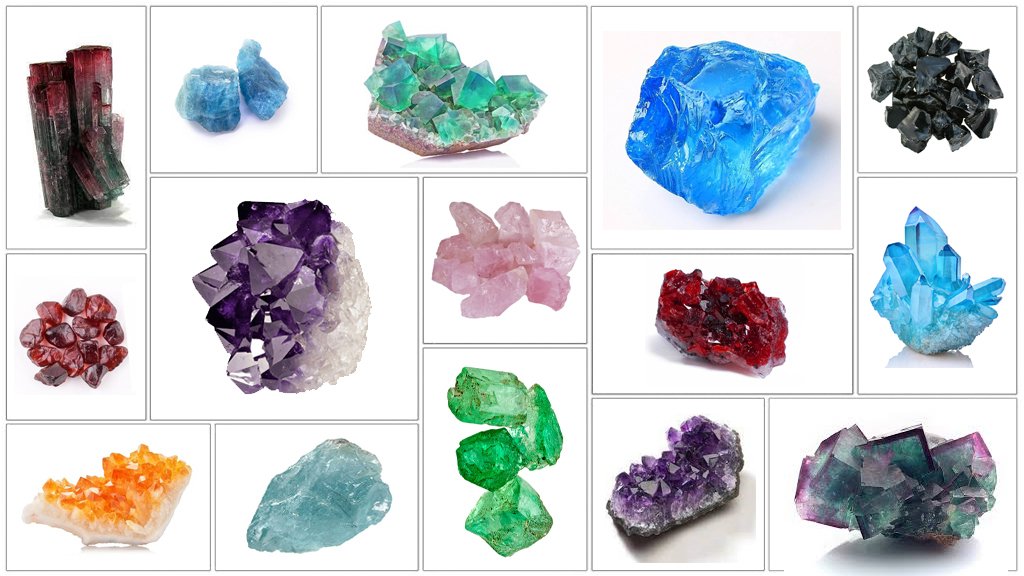
Crystal healing is fast gaining popularity throughout the world. They have been popular since time immemorial due to their numerous special mystic and healing qualities. Crystal healing experts state that every species of crystal has a distinctive frequency that combines spiritual, metaphysical and healing aspects. They stimulate the natural healing energy of the human body or heal, balance and energize the human energy system when kept in close proximity. Crystal impact one’s health, lifespan and overall wellbeing. Similar to how humans have electromagnetic energy fields, crystals too have them. One may connect to the delicate healing vibrations of crystals and harness their power through mere touch, keeping them in close proximity or by meditating with them. Below we have listed the most powerful healing crystals as per experts. These are the most powerful crystals available in the world, ranging from piezoelectric gemstones to crystals that heal, empower and bestow with good health and wellbeing.
Amethyst
Amethyst's is a beautiful semi-precious gemstone of purple to violet color; this popular gemstone encourages peace of mind, clarity, and spiritual insight. Amethyst originates from a variety of minerals in igneous and metamorphic rocks, hot springs, hydrothermal veins, and pyrogenic volcanic rocks. Amethyst belongs to the Quartz family. The related elements of this crystal are water and air. Spiritual knowledge, insights, clairvoyance, psychic abilities, intuition, vision, intelligence, calmness, clarity, subtle thinking, access to dreams and the subconscious, nobility, meditation, manifestation, and divine motivation are among the qualities that this crystal bestows. Its zodiac signs and chakras are Aquarius and Pisces, and the Third Eye and Crown Chakra.
Rose Quartz
Rose Quartz is a highly effective crystal for love and attraction. Rose Quartz supports the healing of sadness, loss, and painful emotions and memories, as well as the opening of avenues for forgiveness, empathy, and the outflow of compassion. Rose quartz is found in the cores of pegmatites, which are created by high temperatures. It is composed of titanium, iron, and manganese. Hydrothermal veins are another place to find it. Earth and Water are the related elements. Self-love, unconditional love, kindness, generosity, purity, honesty, care, romance, platonic intimacy, motherly love, compassion, harmony, and friendship are all qualities of this crystal. Its Zodiac signs and Chakras are Libra, Taurus, and Heart.
Black Obsidian
Black obsidian is an incredibly powerful gemstone for purification, transformation, and manifestation. It helps to protect one from negativity, electromagnetic and electronic interference, and environmental contamination, such as hazardous energy. Black obsidian is a form of silicon dioxide and is generated from felsic lava. It is one of the most potent crystals for luck, because of its self-protective properties. Fire and Earth are the two associated elements. Transformation, cleansing, manifestation, psychic abilities, self-alignment, healing, protection, luck, and stress, anxiety, trauma, and terror relief are all examples of healing properties. It is related with the Root Chakra and Scorpio because of its powerful transforming abilities.
Chrysocolla
One of the most powerful gemstones for bringing tranquility and peace is chrysocolla. This stunning blue-green gemstone enhances confidence, elegance, purity, and sensitivity. A silicate mineral with significant copper constituents is chrysocolla. It is typically discovered in malachite and other copper ores. Water and Air are two elements that are related with this crystal. Calm, peace, intuition, gentleness, patience, subconscious wisdom, acceptance, meditation, grace, sensitivity, kindness, hope, intimacy, honesty, nurturing, honesty, higher truth, communication, and self-love are among the healing qualities of this crystal. Throat Chakra and Taurus and Virgo signs are its related zodiac signs and chakra.
Lapis Lazuli
The ancient Egyptians held lapis lazuli in high regard due to its capacity to induce clear and vivid dreams as well as lucid wakefulness. It helps in communication, truth, and higher wisdom while allowing you to get a greater understanding of yourself. A metamorphic rock called lapis lazuli was created by igneous and hydrothermal processes. Lazurite, calcite, sodalite, and pyrite make up its composition. Air and water are the related elements of lapis lazuli. Inner truth, higher wisdom, strength, instinct, alchemy, purification, manifestation, friendship, love, luck, security, harmony, self-awareness, self-knowledge, honesty, integrity, and inspiration are elements that have healing qualities. Its zodiac signs are Sagittarius and Libra, and its Chakras are the Throat and Third Eye.
Carnelian
Carnelian is a powerful crystal that encourages creativity, imagination, and self-empowerment. The Fire element of the stone helps healing, companionship, personal growth, and interpersonal interactions. Carnelian is a form of chalcedony created by the intergrowth of several silica minerals, such as quartz and mogonite. Creativity, warmth, vulnerability, emotional intelligence, inspiration, creative thinking, sociability, independence, self-expression, harmony, bravery, trustworthiness, joy, self-empowerment, vitality, positivism, and fertility are among the healing qualities of Carnelian. Sacral, Cancer, and Leo are its zodiac signs and chakras.
Aquamarine
Aquamarine is often regarded as the stone for healers, psychics, seers, and prophets, and it undoubtedly ranks among the most powerful crystals. Aquamarine boosts visionary and clairvoyant abilities while also improving calm, inner strength, and inspiration. Aquamarine is made up of granite pegmatite rocks and hydrothermal veins. It's made of Beryl and aluminum silicate. The related element is water. Healing characteristics include cleaning, meditation, peace, calmness, wisdom, intuition, prophesy, inspiration, inner power, serenity, peace, bravery, personal truth and expression, higher views, spiritual insight, healing, sensitivity, and empathic self-awareness. Its Chakras and Zodiac signs are Throat, Scorpio, and Pisces.
Bloodstone
Bloodstone, also known as a blood purifier, is beneficial for healing, purification, and cleaning. It boosts your internal energy systems and activates the body's self-healing capabilities. Bloodstone is an opaque Quartz and Chalcedony mineral with chlorite, pyroxene, and various oxide minerals. Earth and Fire are the related elements. Good health, purification, blood cleansing and strengthening, abundance, luck, alignment, flow of energy, healing, generosity, idealism, and negativity dispelling are among the healing characteristics. Its Zodiac signs are Aries and Pisces, and its Chakra is Root.
Selenite
Selenite is an inspiring gemstone that promotes universal consciousness, peace, and cleansing. It is one of the most powerful crystals since the world's largest crystal cave is home to massive Selenite crystal wands. Selenite is created from crystalline gypsum and contains sulfate and calcium-rich seawater. Water and Ether/Spirit are related elements. Healing qualities include tranquility, positivism, meditation, higher consciousness, universal awareness, unconditional love, compassion, purification, integrity, spiritual enlightenment, purity, psychic growth, and forgiveness. Its Chakra and Zodiac signs are Crown, Taurus, and Cancer.
Garnet
Garnet, commonly known as Red Garnet, is a powerful source of energy, inspiration, and passion. It's one of the best stones for boosting physical instinct and vigor, as well as capturing sexual intimacy fears. Garnet is a complicated gem containing several components. To The related element is fire. Survival instinct, devotion, sexuality, libido, life force, passion, positivism, self-confidence, social skills, energy, success, inspiration, vitality, empowerment, and previous life recollection are some of the healing characteristics. Its Chakra and Zodiac signs are Root, Aries, and Capricorn.
Malachite
Like moldavite, malachite is a highly effective stone for prosperity. It is a great tool for boosting self-esteem and confidence because of its many metaphysical and therapeutic qualities. Since malachite is a copper carbonate hydroxide mineral, different chemicals have been applied to alter copper minerals to create this unusual gemstone. Earth is the related element. Protection, knowledge, inner strength, self-assurance, balance, transformation, optimism, dispelling bad energy, trauma healing, comfort, healing, and a state of equilibrium are among its healing qualities. Heart, Scorpio, and Capricorn are its zodiac signs and chakras.
Moonstone
The properties of moonstone are to enhance emotional intelligence, sensitivity, and feminine wisdom, make it one of the most powerful stones for beauty on the inside. You appear more appealing and spiritually mature from the outside when you have a stronger inner light. The opaque translucent look of moonstone is a result of many intergrowth systems present in the mineral feldspar. Water is the related element. Emotional intelligence, warmth, openness, self-awareness, prosperity, health, sacredness, age-old wisdom, spiritual awareness, contentment, nurturing, motherly love, selflessness, unconditional love, hope, forgiveness, and plenty are among the qualities that are healing. Sacral, Cancer, and Libra are its Zodiac signs and Chakras.
Jeremejevite
Jeremejevite needs to be included in the list of the topmost potent crystals only because of its piezoelectric qualities. When pressure is applied to this pricey and rare crystal, electricity is produced. Aluminum borate with varying hydroxide and fluoride ions is used to make jeremejevite. Its hexagonal arrangement, which has "perfect pyramidal termination," makes it unique. Air and Water are the related elements. Higher consciousness, clairvoyance, psychic abilities, communication, genuineness, truth, knowledge, honesty, self-expression, originality, uniqueness, and the ability to heal emotional trauma and sadness are among its healing qualities. The Throat, Third Eye, Aquarius, and Pisces are its Chakras and Zodiac signs.
Celestite
The term celestial (Latin caelestis) is the source of the word celestite. This uncommon gemstone radiates strong, yet gentle vibrations that are meant to uplift and expand your mind. Strontium sulfate is the source of celestite, which is found in sedimentary rocks. Ether/Spirit and Air are the related elements. Celestial contact, divine inspiration, angelic contact, spirit connection, activation of the higher self, clairvoyance, intuition, universal awareness, imagination, access to dream states, and subconscious wisdom are among the healing powers. Its Zodiac signs are Pisces and Aquarius, and its Chakra is the Crown and Third Eye.
Citrine
Citrine is an all-arounder and one of the most potent gemstones for luck, money, and love. It has a wide range of applications, and many claim to see changes in citrine's therapeutic properties fast. Amethyst or Smoky Quartz that has been overheated is used to create citrine. It is a macrocrystalline quartz variety with a high silicon dioxide content. Air and Fire are its related elements. Good fortune, abundance, prosperity, joy, self-expression, empowerment, success, inspiration, generosity, receptivity, warmth, truth, and spiritual progress are among the healing qualities of this stone. Its Zodiac signs are Gemini, Leo, and Libra, and its Chakra is Solar Plexus.
Category